Before You Let AI Sit In On Client Calls, Read This
AI meeting recorders are now standard in many service businesses, but recording consent laws and client confidentiality exposure could create real liability for dental practices, law-adjacent services, and any business recording consultations.
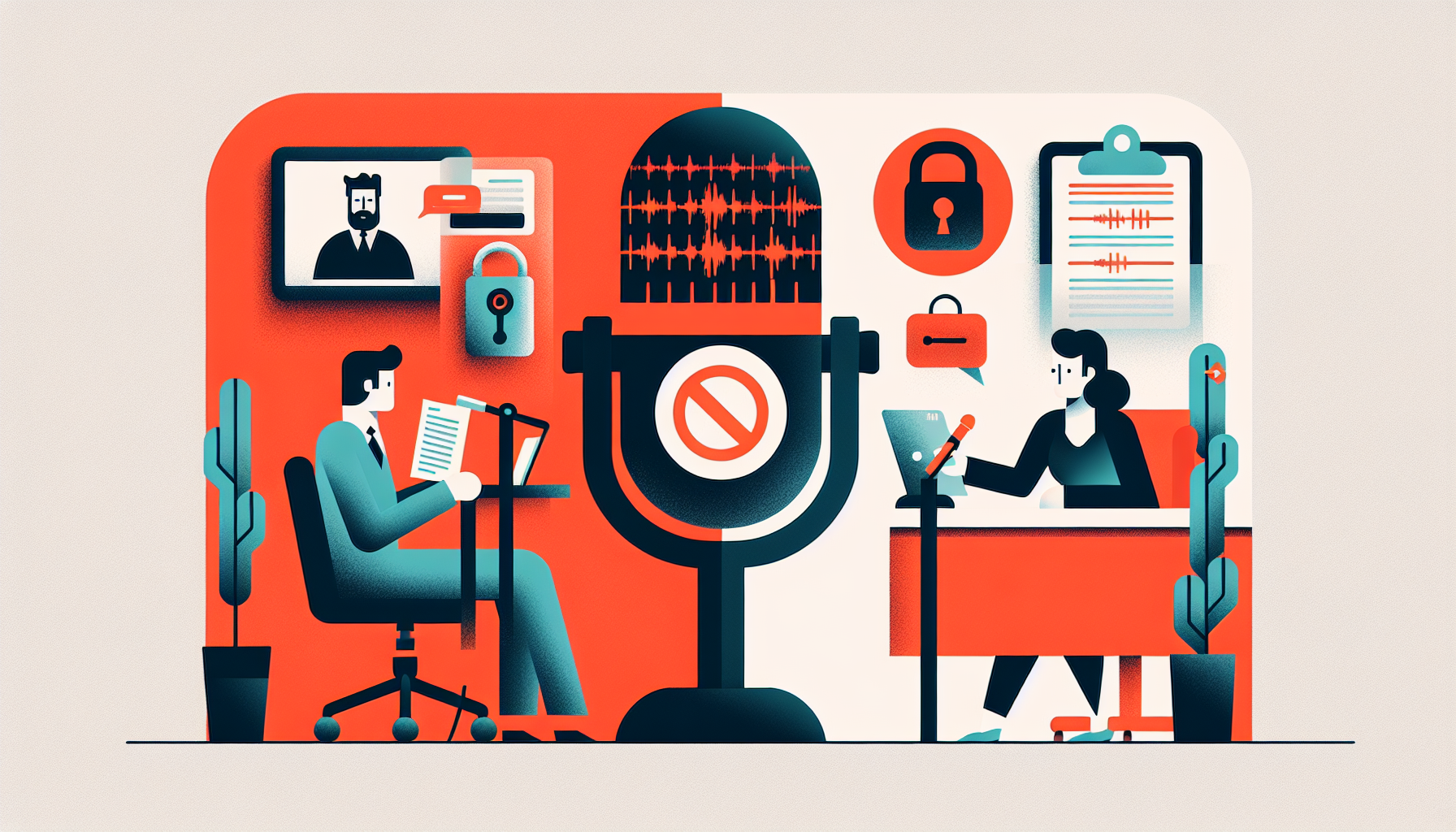
The convenience is real. So is the exposure.
AI meeting recorders — tools like Fireflies, Otter.ai, Read.ai — have gotten cheap and easy enough that service businesses are using them on everything. Sales calls. Consultations. Post-job follow-ups.
The pitch makes sense: stop taking notes, let the AI capture it, get a searchable transcript you can reference later. For a 5-person HVAC company or a two-chair dental practice, that sounds like a genuine operational win.
It might be. But before you turn this on for client-facing calls, you need to understand what recording consent laws actually require — and where confidentiality exposure can follow you even when you do everything right.
Recording consent isn't the same everywhere
The United States has two frameworks for recording consent.
One-party consent states allow you to record a call as long as one participant (you) knows about it. That covers most of the country.
Two-party (all-party) consent states require that everyone on the call be notified and consent before recording begins. California, Florida, Illinois, Michigan, Pennsylvania, and Washington are the major ones — but there are more, and the list shifts.
If your dental practice is in California and you're recording patient consultations without explicit consent, that's a potential HIPAA issue layered on top of a state wiretapping violation. The fines aren't theoretical. California's Invasion of Privacy Act carries civil penalties of $5,000 per violation — per call.
The other thing that catches businesses: where your client is located matters, not just where you are. A Chicago-based cleaning service that books calls with customers who happen to be in Florida is operating under Florida's two-party consent law for those calls, even if the business itself is in a one-party consent state.
The dental practice scenario
Consider a dental practice running new-patient consultations over video. The front office manager turns on an AI notetaker to capture treatment preferences, insurance questions, and scheduling details.
That conversation almost certainly contains protected health information — diagnosis discussions, treatment options, financial hardship disclosures. HIPAA doesn't prohibit recording those conversations, but it does require that any system handling PHI be covered under a Business Associate Agreement (BAA).
Most AI notetaker platforms will sign a BAA if you ask — but many practices never ask. The tool gets activated, the call gets recorded, the transcript gets stored on a third-party server, and nobody checked whether that vendor is BAA-compliant.
If that practice sees 15 new patients a month over video and has been running this setup for a year, that's 180 consultations potentially sitting in a non-compliant system. The exposure isn't just regulatory. If there's a data breach at the vendor, the practice is the covered entity — they're the one explaining it to patients.
Other service businesses with real exposure
Dental is the obvious example, but it's not the only one.
- Law-adjacent services — business consultants, bookkeepers, HR services — often handle client conversations that include financial details, employee disputes, or strategic plans clients consider confidential. No formal privilege attaches, but clients have reasonable expectations that those details aren't stored in a third-party AI platform without their knowledge.
- Mental health and wellness coaches — not licensed clinicians, so not HIPAA-covered, but operating in a space where client trust is the entire product. A disclosed AI notetaker can damage that trust faster than any operational benefit justifies.
- Medical spas and aesthetics practices — if they're operating under physician oversight, they may be handling PHI and not realize it applies to their intake and consultation calls.
What "I told them" doesn't always cover
Some business owners solve this by adding a disclosure to their call invite: "This call may be recorded." That handles consent for basic purposes in most jurisdictions.
It doesn't handle:
- HIPAA BAA requirements
- Whether the AI platform's data retention policy is compatible with your industry's record-keeping rules
- Whether that disclosure was actually seen and acknowledged by the client
A verbal or email disclosure creates a defensible record. A buried line in a calendar invite is harder to point to.
The practical checklist before you deploy
If you're using or planning to use an AI notetaker on client calls:
- Identify your state and your clients' common states — check all-party consent requirements for each
- Check your industry's data handling rules — HIPAA, state professional licensing boards, financial services regulations
- Confirm BAA availability with the vendor if you're handling PHI or anything that looks like it
- Build explicit consent into your call workflow — a short verbal confirmation at the start of the call is cleaner than a buried disclaimer
- Audit what the platform retains and where — transcripts stored indefinitely on a vendor's servers is a different risk profile than local storage you control
The tool isn't the problem. Using the tool without checking these five things is.
Know what you're actually running
AI notetakers are one of dozens of tools that service businesses are plugging in right now without a full picture of the operational or legal exposure they're accepting. Some of those tools are genuinely high-value with minimal risk. Some carry more liability than they save in efficiency.
If you want a clear view of what you're running, what it's actually costing you in risk and missed opportunity, and where AI investments would pay off cleanly — run the free AI audit at operably.ai/audit. It takes 3 minutes and gives you a prioritized picture of where your operation actually stands.
Is this something your business needs?
Run the free audit to see which agents fit your operation — takes 3 minutes.
Stop executing. Start governing.
The worst case: you do the mapping session and leave with a clearer picture of what's costing you — before spending anything on a build.
Start with an operations audit →